
For decades, Facility Management (FM) was the “invisible” profession. Success was defined by silence: if the phones weren’t ringing with complaints about broken AC units or freezing boardrooms, you were doing your job. It was a world governed by the “Break-Fix” cycle—responding to faults, managing contractors, and relying on the gut instinct of seasoned veterans to keep the lights on.
That era is officially over.
We are witnessing a fundamental rewriting of the rules. Artificial Intelligence is no longer a futuristic concept; it is the new backbone of high-performance buildings. This shift isn’t about replacing the human element with an algorithm. It is about giving facility managers a “sixth sense”—the ability to see through walls, predict infrastructure failures, and move from being a cost centre to a strategic business asset.

The Breaking Point of the “Status Quo”
Traditional facility management is, by its very nature, a reactive approach. In the old model, the building tells you there’s a problem only after the occupant is frustrated or the equipment has already failed. This “lag-time” management worked in a simpler world, but today’s facilities are under unprecedented pressure. Modern FMs are now expected to navigate:
- Aggressive Net-Zero Targets: Stricter carbon mandates that leave no room for energy waste.
- The Hybrid Work Paradox: Fluctuating occupancy levels that make traditional heating and cooling schedules obsolete.
- ESG & Wellbeing Scrutiny: A new demand for transparent reporting on indoor air quality and occupant health.
- Skyrocketing Operational Costs: Rising energy prices and labour costs that demand “doing more with less.”
When you rely on manual inspections and fragmented data, you are always one step behind. By the time a problem appears in a monthly report, the opportunity to save money has evaporated. This is why forward-thinking firms are moving toward an AI building management system that turns “What went wrong?” into “What should we do next?”

From “Fixing” to “Foreseeing”: Performance Intelligence
AI-enabled management turns a building from a silent shell into a living data ecosystem. By deploying smart sensors that capture real-time variables—from CO2 levels to desk occupancy—AI creates a continuous feedback loop.
The result is a shift from simple operational control to true performance intelligence. With the right tools, facility teams can finally stay ahead of the curve:
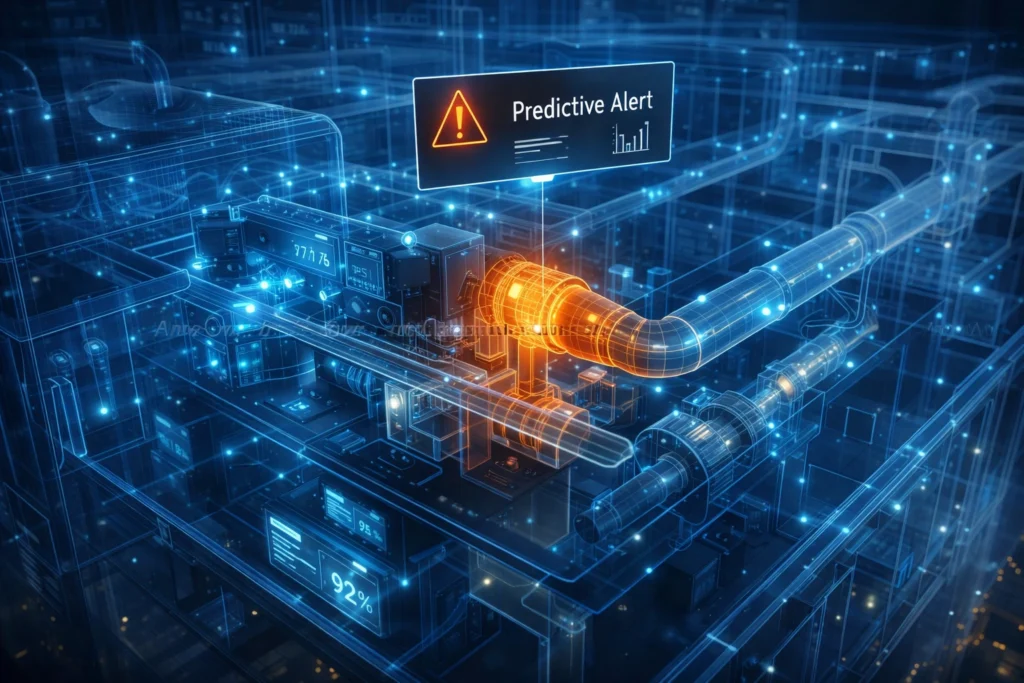
- Predictive Maintenance: AI identifies subtle anomalies in energy draw or temperature that signal a failure weeks before it happens.
- Dynamic Optimisation: Instead of cleaning every floor every night, you clean based on actual usage data.
- Real-Time Response: Systems adjust to external weather patterns and internal occupancy, slashing waste automatically.
This doesn’t replace experience; it empowers it. It allows the FM to stop being a “firefighter” and start being a “pilot,” navigating the building toward peak efficiency with high-fidelity data.
The Evolution of the FM Career Path
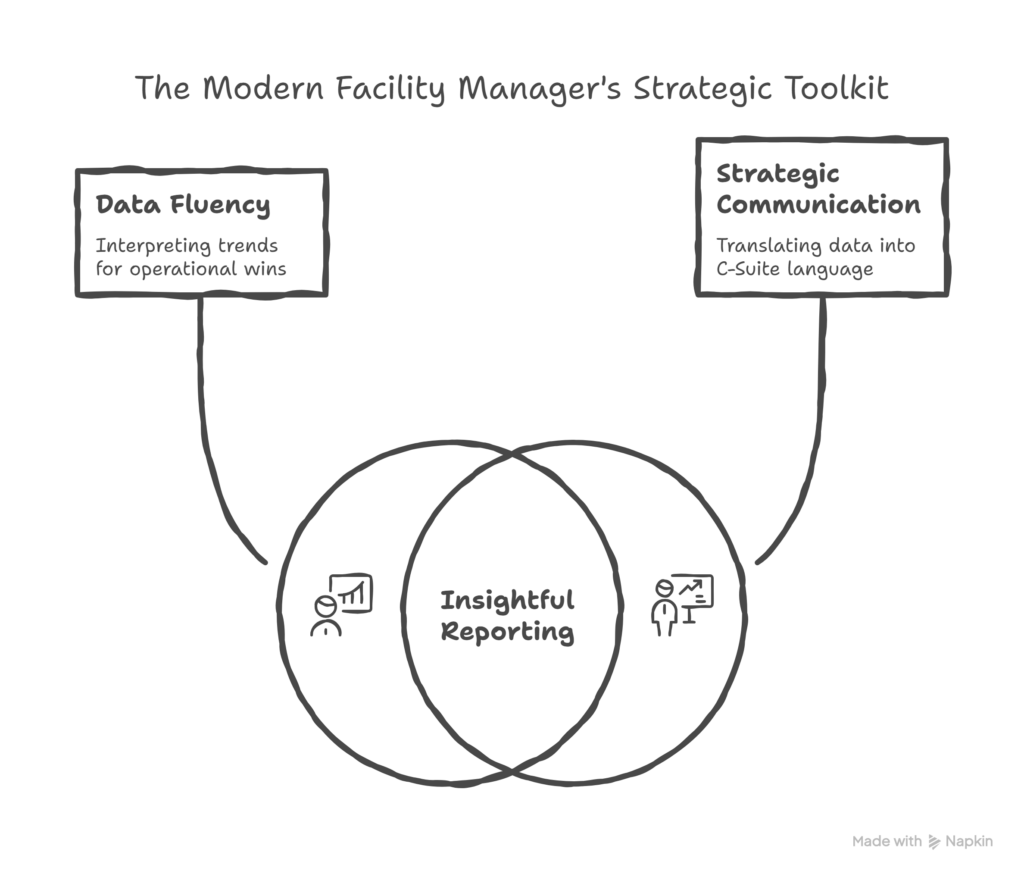
As technology takes over repetitive monitoring, the facility manager’s role is evolving into one of the most strategic positions in the corporate hierarchy. The modern FM is no longer defined by how quickly they can find a wrench, but by how effectively they can interpret a dashboard.
Key skills for this new era include:
Data Fluency: The ability to interpret complex trends and turn them into immediate operational wins.
Strategic Communication: The skill of translating granular building data into the high-level “language of the C-Suite”.
Insightful Reporting: Moving beyond static data to provide continuous intelligence that connects building performance to business outcomes.
You don’t need to be a data scientist to succeed in this new world. You simply need the right tools to turn “big data” into “small, actionable tasks.”
The End of Static Reporting
One of the most visible changes AI brings is the death of the backwards-looking report. Traditional reports summarise what has already happened. They are useful for audits, but limited for daily decision-making.
Modern smart building solutions providers now offer continuous intelligence:
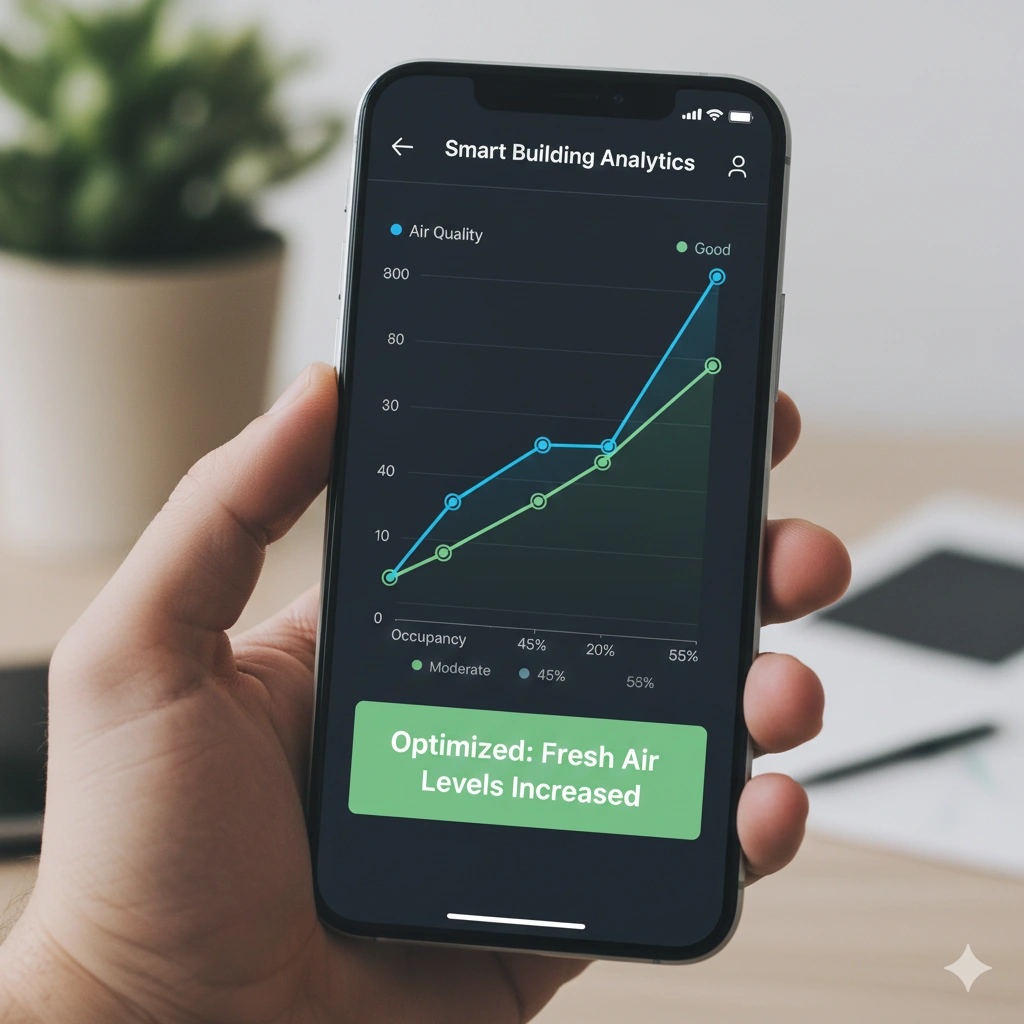
- Live visibility of building health and air quality.
- Automated alerts when safety or comfort thresholds are exceeded.
- Trend analysis that shows gradual equipment deterioration.
- Evidence-ready data for compliance and wellness certifications.
This allows facility managers to focus on prevention rather than explanation, and on improvement rather than justification.
How DIREK Makes the Shift Effortless
While the benefits of AI are clear, the transition can feel daunting. New tools and data streams can easily add complexity rather than reduce it. This is where DIREK and D-XPERT® come in. Our approach is designed around a simple principle: technology should support facility managers, not overwhelm them.
Built for Real FM Workflows
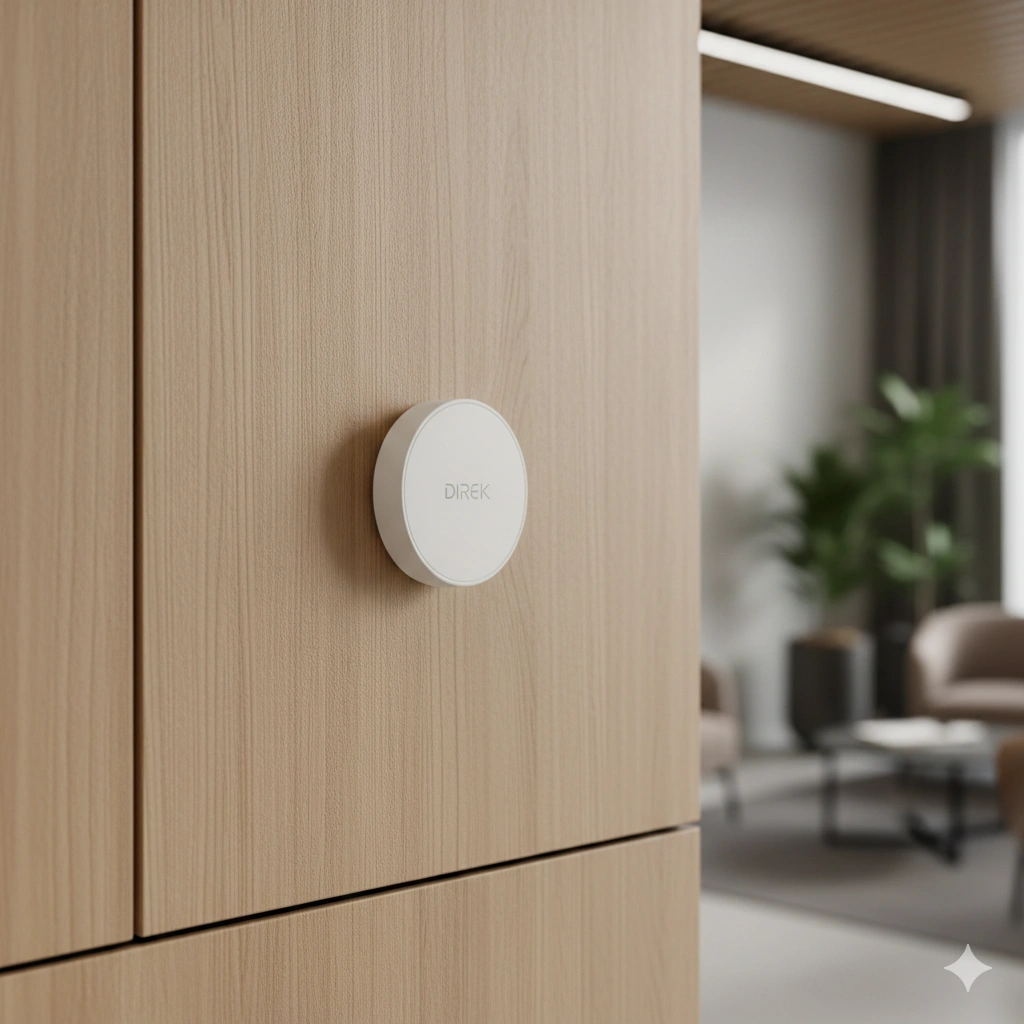
D-XPERT® is built to reflect how facilities are actually managed. It connects to a network of wireless sensors that capture the most relevant data—air quality, temperature, and occupancy—and flows it into a single, intuitive platform. There is no need for manual uploads or disconnected spreadsheets.
Precision Space management solutions
In the age of flexible working, understanding how your square footage is actually used is vital. Our space management solutions help you identify underused zones, overstressed meeting rooms, and opportunities to consolidate space, potentially saving thousands in real estate costs.
Sensors That Adapt to You
Technology should fit into buildings with minimal disruption. DIREK’s ecosystem is wireless, low-maintenance, and quick to deploy. This makes it easy to start with a few key areas, prove the ROI, and scale when you are ready.
The Bottom Line: Can You Afford to Stay Reactive?
The expectations placed on facility management have fundamentally changed. With rising energy costs and the realities of hybrid working, relying on reactive, manual processes is no longer sustainable. Buildings are becoming smarter, and the organisations that succeed will be those that manage them with intent, insight, and strategy.
AI is not a step into uncertainty. It is the clarity facility managers have long been missing. It marks the shift from simply maintaining assets to actively improving performance, resilience, and long-term value.
The opportunity is already here. The question is whether you are ready to take advantage of it.